
Worry and anxiety
Talking through what keeps you awake can make worries feel smaller and less tangled.
Talking support
Sometimes the most useful thing is to talk openly with someone who listens carefully, doesn't judge and helps you make sense of what's happening.
Free & no obligation
Tell us what you'd like help with and Sonya will call you back with prices, availability and answers to your questions.
Prefer to talk? Call 0191 580 1548
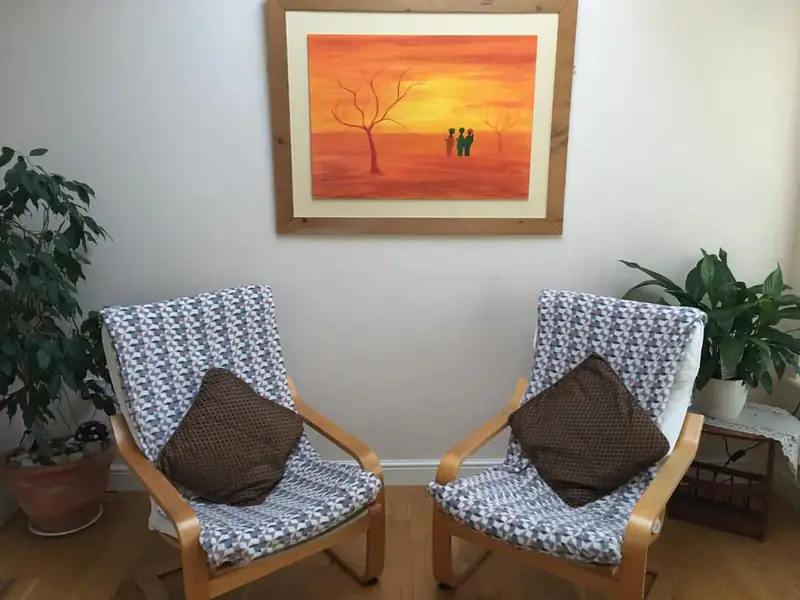
Counselling is a talking therapy in which you meet regularly with a trained practitioner to explore your thoughts, feelings and circumstances. The counsellor offers time, attention and a non-judgemental space. The aim isn't to tell you what to do, but to help you see your situation more clearly and find your own way forward.
Many people come to counselling during a difficult patch rather than a crisis. You might feel stuck, keep going over the same worries or simply need somewhere private to think out loud. Putting things into words, with someone who is fully focused on you, can make them feel more manageable.
Sonya Hudson holds a Level 3 Diploma in Psychotherapeutic Counselling, and she brings a counselling approach of careful listening, reflection and empathy to all her work. Her counselling sessions offer supportive talking time for everyday emotional difficulties and life changes. If you'd find it helpful, they can also be combined with hypnotherapy, NLP or EFT.
These sessions are not a specialist psychotherapy or mental health service. If you are living with a severe or complex mental health condition, the best first step is to speak to your GP, who can refer you to specialist support.
If you need urgent help: call 999 or go to A&E in an emergency. For urgent mental health support, call NHS 111 (option 2 in England) or contact your GP. Samaritans are available day and night on 116 123.
Why people explore it
People seek counselling for all kinds of reasons. These are some of the everyday difficulties and life changes that often bring people to sessions.
Talking through what keeps you awake can make worries feel smaller and less tangled.
Counselling offers time to make sense of the many feelings that can follow a bereavement or another kind of loss.
Talking can help you understand recurring patterns with partners, family or friends.
You can explore where self-doubt comes from and how it affects the choices you make.
Redundancy, divorce, moving home or retirement can unsettle even the most resilient people.
Sometimes you simply need a private space to think out loud with someone who is really listening.
During your appointment
Counselling follows a steady rhythm, and you set the pace throughout.
A free phone call lets you talk about what's prompting you to seek support and whether this is the right setting.
At your first session, you'll discuss confidentiality, practical arrangements and what you hope to gain from counselling.
You talk, and Sonya listens, reflects and asks questions that help you explore. You choose the topics.
Every few sessions, you'll check how things are going and decide whether to continue, change focus or finish.
Realistic expectations
These sessions suit everyday difficulties and life changes. The lists below show where they fit, and where other services are better placed to help.
Yes. What you discuss is kept confidential, within clear limits that are explained at your first session. The usual exceptions are where there is a serious risk of harm to you or someone else, or where the law requires information to be shared. In those rare cases, the aim is always to talk to you first wherever possible.
Notes are kept securely and to a minimum. You can read more in our privacy policy.
Sonya's style is warm, open and down to earth. She aims to make sessions feel safe and unhurried, so that you can talk about difficult things at your own pace.
If it ever seems that another type of support would serve you better, such as help through your GP or a specialist service, she will tell you honestly. She'll then help you think through your next steps.
About Sonya HudsonIt depends on what you'd like to work on. Some people find that a handful of sessions is enough to get through a difficult period, while others prefer to meet for longer. Sessions last around 60 minutes and are often weekly or fortnightly at first, and you're never tied into a fixed number.
Sessions take place at Sonya's clinic at Hadrian Lodge West, 28 Rosedale, Wallsend, Newcastle upon Tyne, by arrangement. Fees are explained during the free telephone consultation. Online video sessions may be possible for some approaches, so please ask if that would be easier for you.
Questions
Counselling is a conversation while you're fully alert, focused on exploring and understanding. Hypnotherapy uses a relaxed, focused state to work on specific changes. Some people find a mix of the two useful.
That's very common, especially at the start. Sonya can help by asking gentle questions, and the things that matter most often come up naturally once you begin talking.
Not in the sense of telling you what to do. Sonya may reflect back what she notices or share useful information, but the decisions stay with you, because you know your own life best.
Yes. In England you can refer yourself to NHS Talking Therapies for common problems such as anxiety and depression, or speak to your GP. Some people choose private sessions for a shorter wait or a particular way of working.
The first step is a free phone call with Sonya. You can ask questions, talk about what's on your mind and then decide whether you'd like to book. There's no pressure either way.