
Deep relaxation
A session gives you a rare chance to lie still, switch off and be looked after.
Complementary relaxation
Reiki is a gentle practice from Japan in which the practitioner rests their hands lightly on, or just above, your body. Many people find it deeply calming.
Free & no obligation
Tell us what you'd like help with and Sonya will call you back with prices, availability and answers to your questions.
Prefer to talk? Call 0191 580 1548
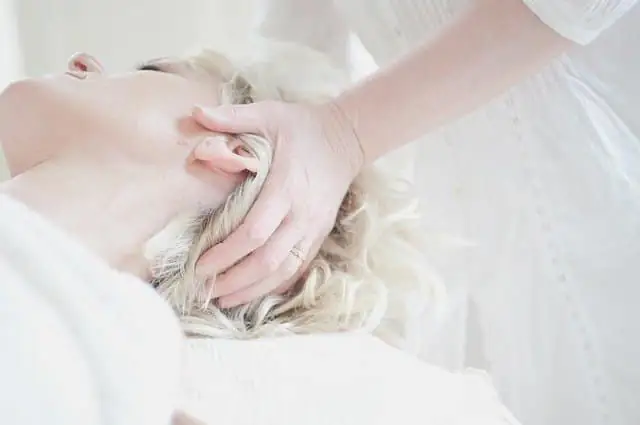
Reiki is a Japanese relaxation practice developed by Mikao Usui in the early twentieth century. Practitioners describe it as a way of channelling "universal life energy" to support relaxation and a sense of balance. In a Reiki session, you lie fully clothed while the practitioner rests their hands gently in a series of positions on or near your head, shoulders, body and feet.
At Simple Hypnotherapy, Reiki is offered by Sonya Hudson as a complementary practice. You might enjoy it on its own as a period of deep rest, or as a quiet counterpart to talking-based sessions such as hypnotherapy or counselling.
Most people simply feel very relaxed during Reiki, and some drift off to sleep. Others notice warmth, tingling or a pleasant heaviness where the practitioner's hands are resting. There's no right or wrong way to experience it, and it's fine if you notice very little apart from a good rest.
Afterwards, people often describe feeling calm, a little sleepy or clear-headed. If you can, give yourself some quiet time after your session rather than rushing straight into something demanding.
Why people explore it
People are drawn to Reiki for different reasons, and most of them come back to rest and calm.
A session gives you a rare chance to lie still, switch off and be looked after.
Reiki offers a quiet pause when life feels busy or demanding.
Some people find it helps them feel more settled when sleep is difficult.
Some people living with a long-term condition value Reiki as comfort and rest alongside their medical care.
You may simply want to find out what Reiki feels like for yourself.
Reiki is a non-verbal complement to talking approaches, and some people like to alternate the two.
During your appointment
Reiki sessions are calm and unhurried, and you're asked about your comfort at every stage.
You start with a short chat about how you're feeling, anything Sonya should know and how comfortable you are with touch.
You lie fully clothed on a couch, with a blanket if you'd like one. Shoes are usually removed.
Sonya rests her hands gently on, or just above, a sequence of areas. You can ask for hands-off Reiki at any time.
You return slowly, have a glass of water and talk about your experience if you'd like to.
Realistic expectations
Reiki is gentle and non-invasive, and you stay fully clothed throughout. You decide how much touch feels comfortable, and the session can stop whenever you want it to.
Reiki is a real practice that many people value, but the energy it describes has not been shown to exist. Scientific studies have not demonstrated a Reiki energy or ideas such as chakras, and Reiki is not a medical treatment.
Studies of Reiki have generally been small, and reviews have not found reliable evidence that it treats any condition beyond the effects of relaxation and attention. Feelings of warmth, tingling or deep calm are real experiences, but they aren't proof of a healing mechanism. What many people do report is that an unhurried hour of rest, with gentle and respectful touch, leaves them feeling calmer and more settled.
Sonya is a Reiki Master and Karuna Reiki Master and a member of the UK Reiki Federation. Her sessions are calm, unhurried and respectful of boundaries.
You'll always be asked about your comfort with touch before you begin, and hands-off Reiki is available if you'd prefer it. Knowing exactly what will happen helps many people relax more fully.
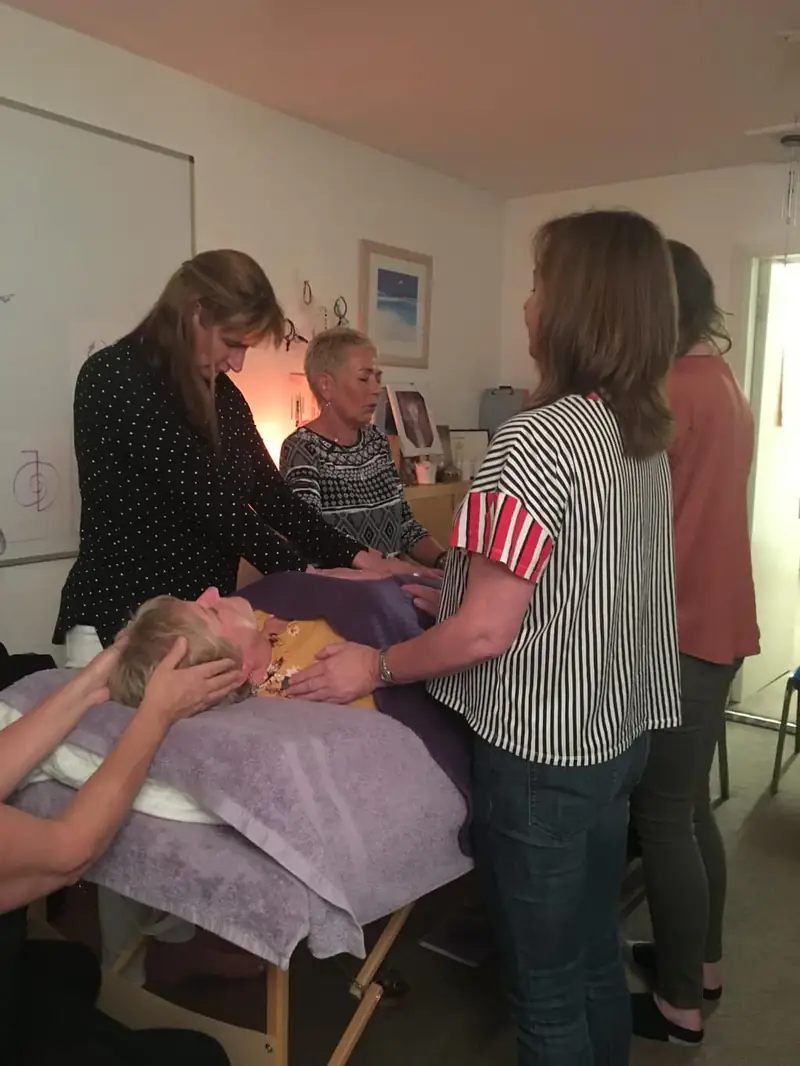
There's no set number. Some people book a single session to see what Reiki is like, while others come back from time to time when they feel they need a restful pause. You can decide as you go, and you're never tied into a course of sessions.
Reiki sessions take place at Sonya's clinic at Hadrian Lodge West in Wallsend, Newcastle upon Tyne, by appointment. They usually last 60–90 minutes, including time to talk before and after. Fees are explained during the free telephone consultation, which is also a good moment to ask anything you're unsure about.
Questions
Reiki is a complementary practice and doesn't replace medical care. Never stop or change a treatment because of Reiki, and if you have new or worrying symptoms, please see your GP. Read our health information.
Comfortable, loose clothing is best. You stay fully dressed throughout, and usually only your shoes are removed.
Yes. Hands-off Reiki, where the practitioner's hands stay just above the body, is always available. You can also switch to hands-off part way through a session.
Yes, and it's quite common. Falling asleep doesn't spoil the session, and many people wake up feeling refreshed.
No. Reiki isn't linked to any religion, and you don't need to hold any particular beliefs to have a session.
The first step is a free phone call with Sonya. You can ask questions, talk about what's on your mind and then decide whether you'd like to book. There's no pressure either way.