
Self-talk and confidence
You learn to notice unhelpful inner commentary and practise kinder, more useful ways of speaking to yourself.
Patterns & perspective
NLP is a practical, conversation-based approach that helps you notice how you think, speak and react, and then try out alternatives that may suit you better.
Free & no obligation
Tell us what you'd like help with and Sonya will call you back with prices, availability and answers to your questions.
Prefer to talk? Call 0191 580 1548
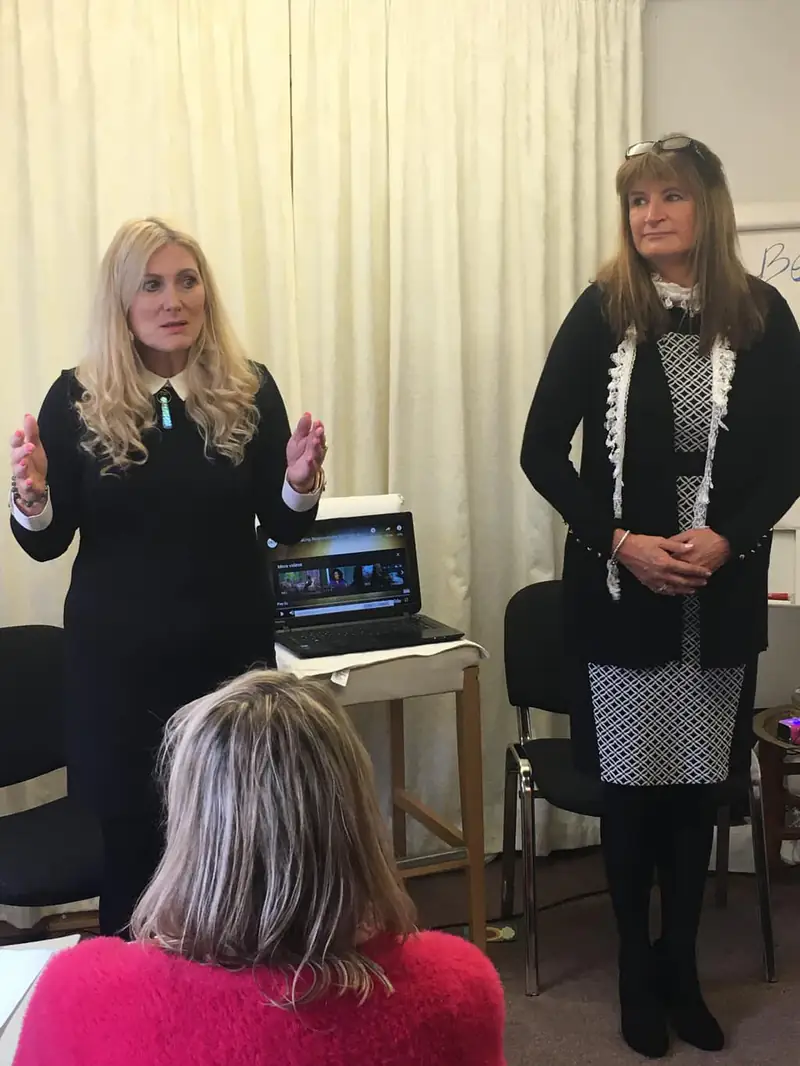
NLP, or Neuro-Linguistic Programming, is a coaching-style approach to personal change. It was developed in the 1970s by studying how skilled communicators and therapists worked. The name brings together three ideas: how we process experience (neuro), the language we use to describe it (linguistic) and the habits of thought and behaviour that follow (programming).
In everyday terms, NLP offers a set of techniques for looking at your own thinking. You might explore how you picture a situation in your mind, the words you use about yourself, or the automatic reactions that kick in under pressure. Then you experiment with different ways of approaching them.
It's worth being clear from the start. NLP is a personal development and communication approach, not a scientifically established psychological therapy, and research has not supported many of its original claims. Even so, many people find its practical, goal-focused techniques a useful structure for reflection and change.
NLP works by making your habits of thinking visible, so that you can decide whether to keep them. Most of us react to familiar situations on autopilot. A sinking feeling before a meeting or a harsh inner voice after a mistake can feel fixed, yet each one follows a pattern that can be noticed and questioned.
A practitioner helps by asking precise questions about what happens in those moments. For example, Sonya Hudson might ask what you see in your mind's eye just before you speak in public, or what tone your inner voice uses. Once the pattern is clear, you can try small changes, such as picturing the scene from further away or answering that voice more kindly, and notice what difference they make.
Why people explore it
NLP tends to suit people who like a practical, active way of working. These are some of the areas people most often bring to sessions.
You learn to notice unhelpful inner commentary and practise kinder, more useful ways of speaking to yourself.
Mental rehearsal can help you prepare for interviews, presentations and other times when all eyes are on you.
Sessions can explore automatic responses to particular people, places or triggers.
Stepping into different viewpoints can help you understand a situation or relationship more clearly.
Athletes and students sometimes use goal setting and mental rehearsal to prepare for important moments.
You can build simple mental routines to use when you feel stress starting to build.
During your appointment
NLP sessions are conversational and active, and most follow a similar pattern from start to finish.
You start by deciding what you'd like to be different, and Sonya helps you make that goal as specific and positive as possible.
Through conversation, you look at how the current pattern works, including what you notice, think, feel and do.
Guided exercises such as visualisation, reframing or perspective-taking let you experiment with a different response.
You leave with simple techniques to try in daily life, then look at what worked when you next meet.
Realistic expectations
NLP is best seen as a practical toolkit for reflection rather than a treatment. Knowing its limits helps you decide whether it suits what you're looking for.
No. Independent reviews have found little high-quality evidence that NLP works as a treatment for health conditions, and research has not supported some of its core ideas. That's why it is described here as a coaching-style toolkit that some people find practical, rather than as a therapy.
If you're looking for an evidence-based psychological therapy such as CBT, your GP can tell you what's available. In England, you can also refer yourself directly to NHS Talking Therapies.
Sonya holds a Master Practitioner Diploma in NLP and uses it flexibly rather than as a rigid method. She has also trained coaches and run workshops, so she's used to explaining techniques in plain language.
In practice, NLP often appears within a wider session. For example, it might be used to clarify a goal before hypnotherapy, or to rehearse a new response afterwards.
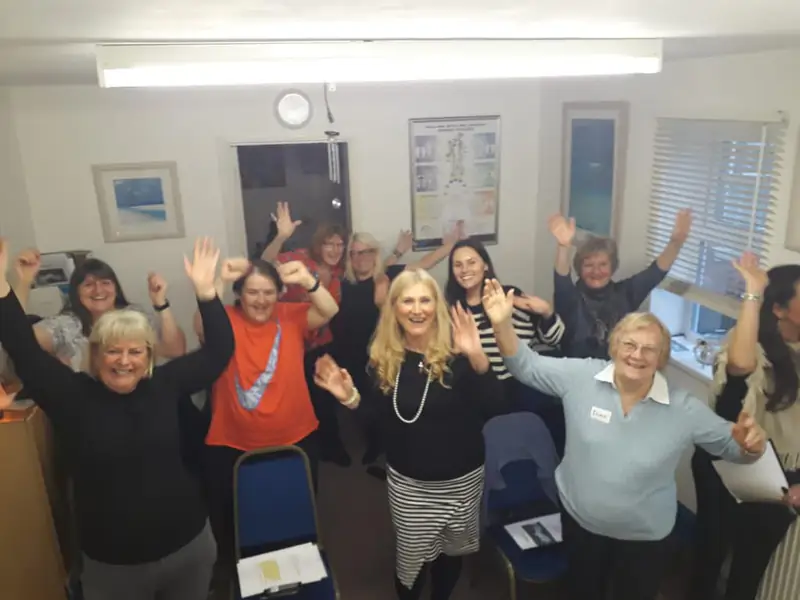
Because NLP is goal-focused, many people find that a small number of sessions is enough to work on one clear aim. Wider or long-standing concerns usually need more time. You'll agree a plan together and review it as you go, and you're never tied into a fixed number of sessions.
Sessions usually last 60–90 minutes and take place at Sonya's clinic in Wallsend, Newcastle upon Tyne. Fees are explained during the free telephone consultation, which is also a good time to ask whether NLP, hypnotherapy or a mix of the two would suit your goal. Online video sessions may be possible for some approaches, so please ask.
Questions
NLP is a personal development approach and doesn't replace medical or psychological care. If your mental health is getting worse, please speak to your GP. Read our health information.
No, although they are often used together. NLP is mostly conversation and guided exercises while you're fully alert, whereas hypnotherapy involves a deeply relaxed state.
The two overlap a great deal, and NLP is often used within coaching. Both focus on goals and practical steps, but NLP brings its own set of techniques for exploring language and perspective.
Not necessarily. NLP tends to focus on how things work now and what you'd like instead, although some background can be useful.
You'll usually leave with one or two simple exercises, such as a short visualisation or a new way to answer your inner critic. They take a few minutes a day, and trying them in real situations is how you find out what works for you.
The first step is a free phone call with Sonya. You can ask questions, talk about what's on your mind and then decide whether you'd like to book. There's no pressure either way.