A simple breathing exercise for stressful moments
A two-minute technique you can use anywhere when stress builds, with no equipment or special setting needed.
Free & no obligation
Request a free quote
Tell us what you'd like help with and Sonya will call you back with prices, availability and answers to your questions.
Prefer to talk? Call 0191 580 1548
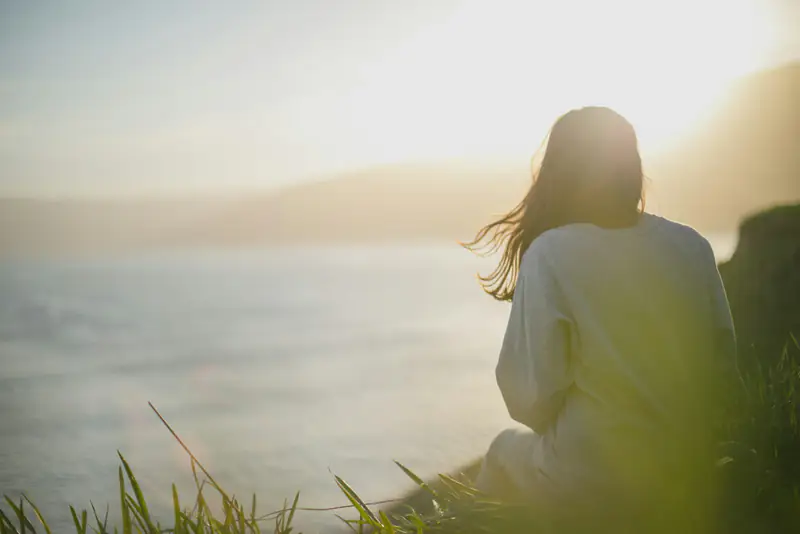
When you're stressed, your breathing tends to become fast and shallow, high in the chest. Gently slowing it down, especially the out-breath, is one of the simplest ways to help your body settle. This breathing exercise for stressful moments takes about two minutes and needs no equipment. You can do it sitting, standing or lying down, so it works almost anywhere.
Why slow breathing helps when you're stressed
Slow breathing helps because your breath and your stress response are closely linked. When you feel under pressure, your body gets ready for action, and quick, shallow breathing is part of that. Breathing slowly, with a longer out-breath, sends the opposite signal and encourages your body's natural calming response.
You can't always control the situation that's causing the stress, but you can usually control your breathing. That's what makes this exercise so useful. It gives you something practical to do in the moment, rather than simply telling yourself to calm down.
The exercise, step by step
The basic idea is to breathe in for a count of four and out for a count of six. Follow the steps below at your own pace, and adjust the counts if you need to.
- Get comfortable. Let your shoulders drop. If it feels okay, close your eyes or rest your gaze on a point in front of you.
- Notice your breath. Don't change anything yet. Just notice where you feel it, whether that's in your nose, chest or belly.
- Breathe in gently through your nose for a count of four. Let your belly expand rather than lifting your shoulders.
- Breathe out slowly through your mouth or nose for a count of six, as if you were gently fogging a window.
- Repeat for eight to ten breaths. If the counts feel too long, try breathing in for three and out for five. What matters is that the out-breath is a little longer than the in-breath.
- Finish by letting your breathing return to its natural rhythm, then notice how you feel.
How often should you practise?
A couple of minutes once or twice a day is enough for most people. The aim is to make the exercise familiar, so it's easier to use when you really need it. Like any skill, it's much harder to learn in the middle of a stressful moment than when you're already feeling settled.
It helps to link your practice to something you already do every day. You might do it after brushing your teeth, while the kettle boils or before you get out of the car at work. After a week or two, many people find that slowing their breathing starts to happen more naturally.
Tips for making it work for you
Don't force it
If counting makes you feel more anxious, drop the numbers altogether. Simply let each out-breath be slow and soft, and a little longer than the in-breath. Breathing should never feel like a strain, so ease off if you notice yourself gulping air or tensing up.
Pair it with a cue
Some people place a hand on their belly, while others silently say a word like "settle" on each out-breath. Over time, the cue itself can become a quick reminder to slow down, even before you start counting.
Notice what changes
After each practice, take a moment to notice how you feel. You might find that your shoulders have dropped or your thoughts have slowed a little. Spotting these small changes helps you trust the exercise when you need it most.
When can you use this breathing technique?
You can use it whenever you notice stress starting to build. Common moments include before a presentation, an exam or a difficult conversation, in heavy traffic, or at work when tasks pile up. It's also useful if you wake in the night with a busy mind and want something gentle to focus on.
The exercise won't remove the cause of your stress. What it can do is give you a moment of space, so you can choose how to respond rather than reacting on autopilot.
Can breathing exercises help with anxiety and sleep?
Many people find slow breathing a helpful part of managing anxiety and settling down at night. It works best as one tool among several, alongside regular routines, exercise and talking to someone about what's on your mind. If you have panic attacks, a steady out-breath can give you something calm to focus on while the feelings pass.
If sleep difficulties are your main concern, try the exercise once you're in bed with the lights off. Keep the counts gentle, and let yourself stop counting if you start to drift off.
If breathing exercises make you feel dizzy or uncomfortable, stop and breathe normally. If you have a respiratory condition, check with your GP or practice nurse first. If you experience chest pain or severe breathlessness, seek medical help immediately by calling 999.
Getting more support with stress
Breathing techniques are often part of sessions at Simple Hypnotherapy, alongside approaches like hypnotherapy and EFT. In hypnotherapy, slow breathing is often used to help you relax at the start of a session. EFT gives you another simple technique to use when stress builds.
If stress or worry is affecting your daily life, you can read more about how we approach stress. You're also welcome to book a free phone consultation with Sonya Hudson, our clinical hypnotherapist, to talk through what might help.
Written by the Simple Hypnotherapy team. This article is for general information and isn't a substitute for personalised medical advice.